
A 20-year-old woman presents to the emergency department with altered mental status. She is accompanied by a friend, who reports that the patient had a positive home pregnancy test 3 months ago but that she has not seen a health care provider in more than a year. Earlier today, the patient reported new pelvic pain; fever; and yellow, blood-tinged vaginal discharge.
In the emergency department, her vital signs are a BP of 85/40 mm Hg, pulse of 136/minute, respiratory rate of 27/minute, Spᴏ₂ of 93% with a heated high-flow nasal cannula at FIᴏ₂ of 1.0, and temperature of 40.0 °C. Physical examination results are notable for a palpable uterine fundus with tenderness. Results of a speculum examination are notable for a linear laceration and dusky appearance of the cervix with thin, purulent fluid from the cervical os. Laboratory data are shown in Figure 1, and a chest radiograph is shown in Figure 2.
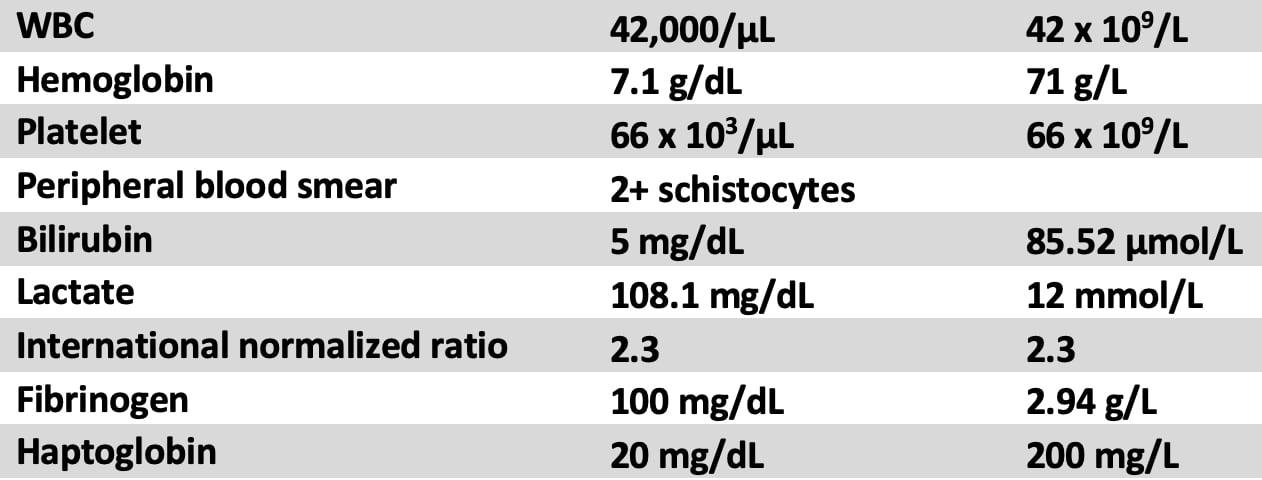
Figure 1. Laboratory values.
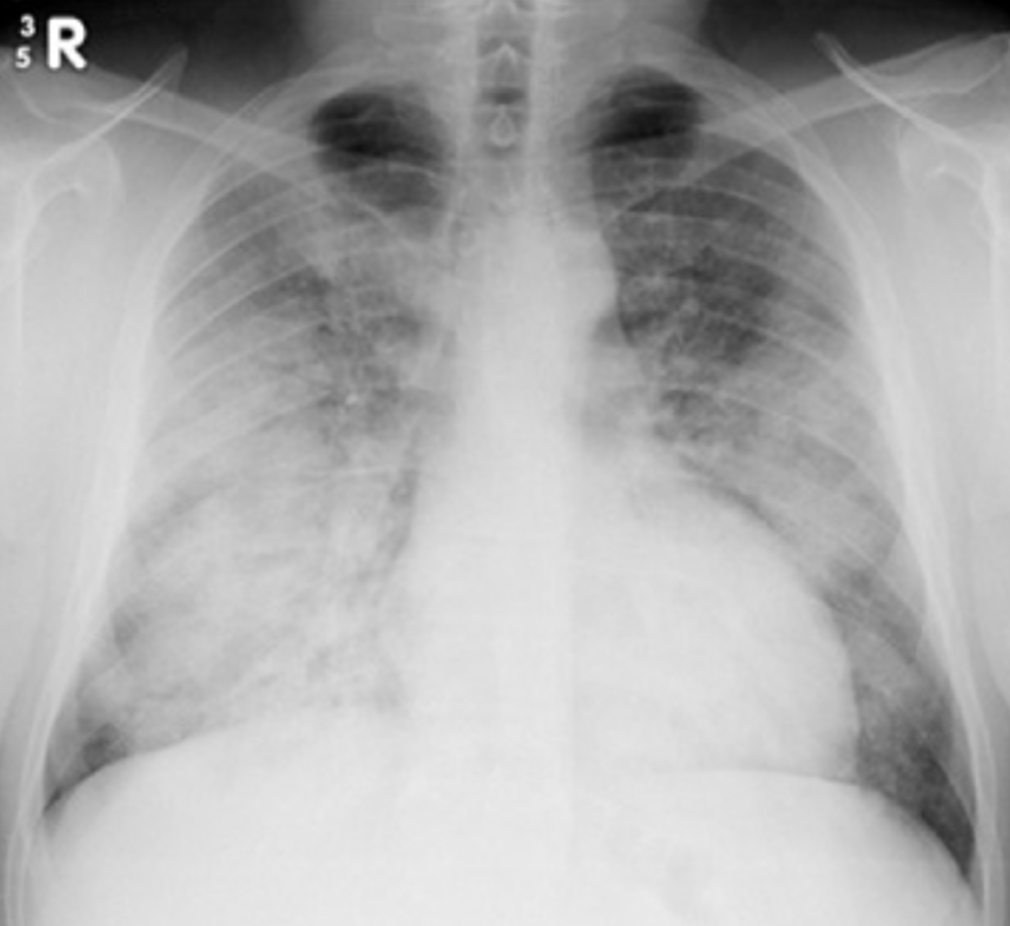
Figure 2. Chest radiograph.